11. What is your professional high purpose in life (what you would like to achieve in /with your work)?
I would love to make my students aware of the fact that there is more to life than just working hard for your money. I would love to teach them that knowledge is power and that there is nothing wrong with having a passion and to be eager to learn.
12. A. Is there a connection between your professional high purpose and world citizenship?
The connection between my professional high purpose and world citizenship has to do with the fact that the world as we know it now revolves around consumerism and capitalism. The way we eat, travel and behave ourselves is not beneficial for our mental health or the health of the earth on the long run. Furthermore, I think people are made fun of often when they are passionate about something or when they are eager to learn. I would really love to change that. Especially among students, it is “not cool” to be well behaved or eloquent. I think that it is a shame and should change. Being well behaved and eloquent helps us to understand each other better and not only to act out of selfishness, in my opinion.
13. What are your main key qualities from the list above? Write them down in order of importance, from high to low. Write down only three key qualities that apply to you.
14. Explain for each key quality one practical example how someone else would notice this is one of your key qualities.
15. Is there a connection between your key qualities and world citizenship?
Key quality 1: perseverance
Example how one would notice this as my key quality: I always think I give up easily but I have proven myself many times that I actually don’t. I think it becomes evident that it am persistent in the way that I always try to find the best option or solution to things. I continue to do my studies even though I think I am too old. I can look at the bigger picture and pull myself through.
The connection to world citizenship: I think one needs lots of perseverance in order to be a world citizen. Doing what is right is not always easy. Trying to change your own ways can be challenging but perseverance is needed in order to make a change on the long run.
Key quality 2: empathy
Example how one would notice this as my key quality: the fact that I am tolerant becomes vivid when we look at my direct surroundings. I am very flexible and I can easily put myself in other people’s situations. When people tell me something, I don’t listen to respond, I rather listen to understand. It is important that there is no judgement and the initial goal is to understand each other.
The connection to world citizenship: in order to become world citizens, people need to understand each other and must be able to show empathy. When we show empathy it becomes easier to put yourself in the shoes of another person and look at the situation from their perspective. This triggers dialogues instead of arguments.
Key quality 3: clarity
Example how one would notice this as my key quality: I can easily notice malfunctions because I am someone who desperately needs clarity myself. I can easily spot what is unclear or what could cause struggle. That is why I try to plan things as precise as possible whenever I go on a trip and why I am as direct in my speech. Because I wouldn’t want to be surprised.
The connection to world citizenship: I don’t think this quality necessarily has a direct link to world citizenship. It just means that I love to be clear and transparent towards people so that they understand me better.
16. Which of the three types of global citizenship, mentioned above in the explanation, is the closest to your personal and/or professional beliefs and professional identity?
I would classify as an open global citizen. Since I do have the idea that the world has become smaller and that people are more involved and that borders actually can be crossed.
17. Write down which beliefs that you think are important (see previous questions) matter to this type of global citizenship
Care for others, empathy, trust clarity and compassion.
18. Can you explain why this type of global citizenship is closest to your personal beliefs and professional identity?
Being an open global citizen is close to my personal identity. I am not much of an activist, whether this would be a political or ecological one. Of course I want the world to become better, but at the moment I am not investing lots of effort into that. I am much rather interested in meeting new people and gaining new insights on different cultures.
19. Can you give one specific example how others will notice that the type of global citizenship that is closest to you (question 16) represents you most?
The fact that I am an open global citizen becomes evident when one takes a closer look at my group of friends. I have friends from lots of different nationalities as I have mentioned before.
20. Do you expect that the type of global citizenship that is now closest to you, will also be closest to you after the minor?
I don’t think that the open global citizen will still be the closest one after the minor. Because I plan on getting new experiences during this minor which will encourage me to move me more to the moral global citizen. Just in the form of small steps towards it because I want to become more conscious about the way I consume.
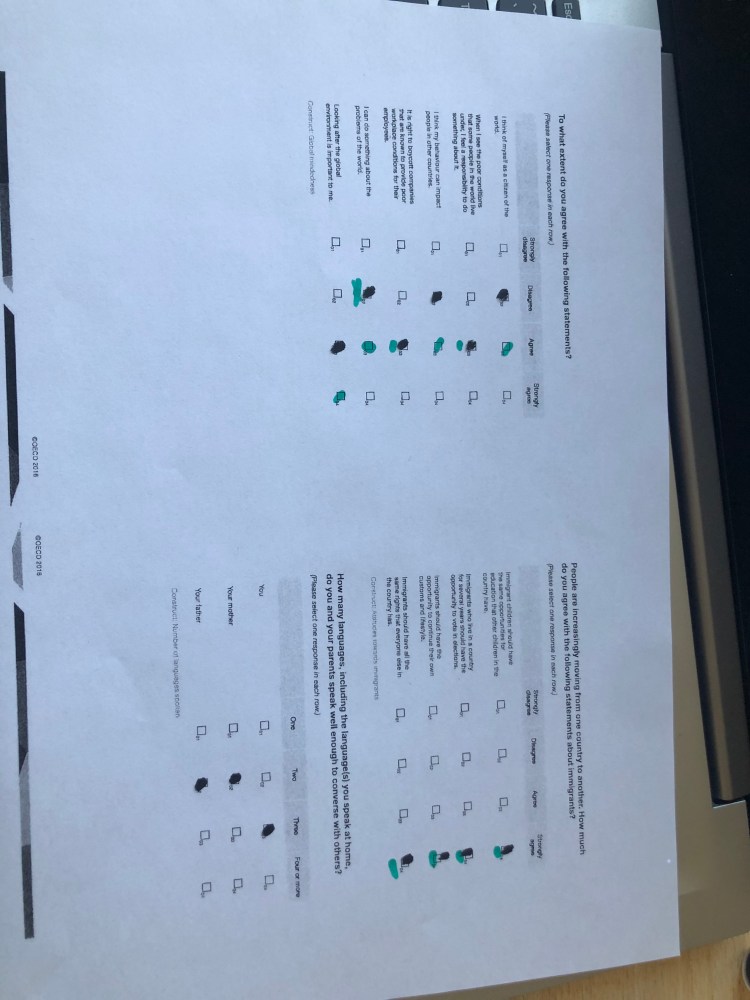
Pisa comparison
Outcome
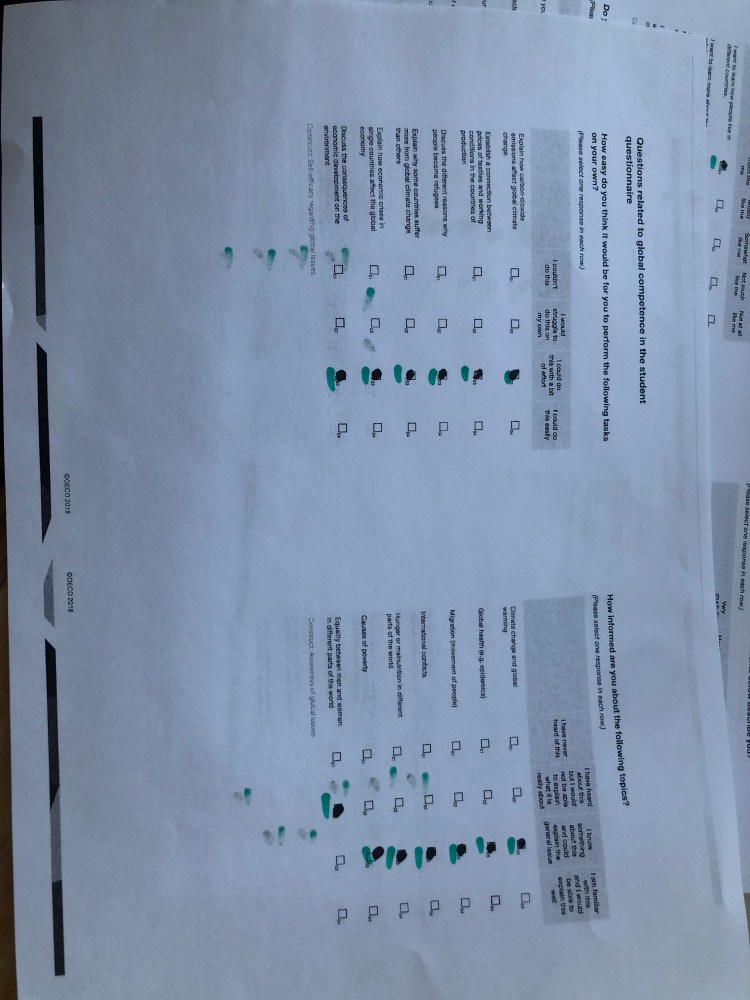
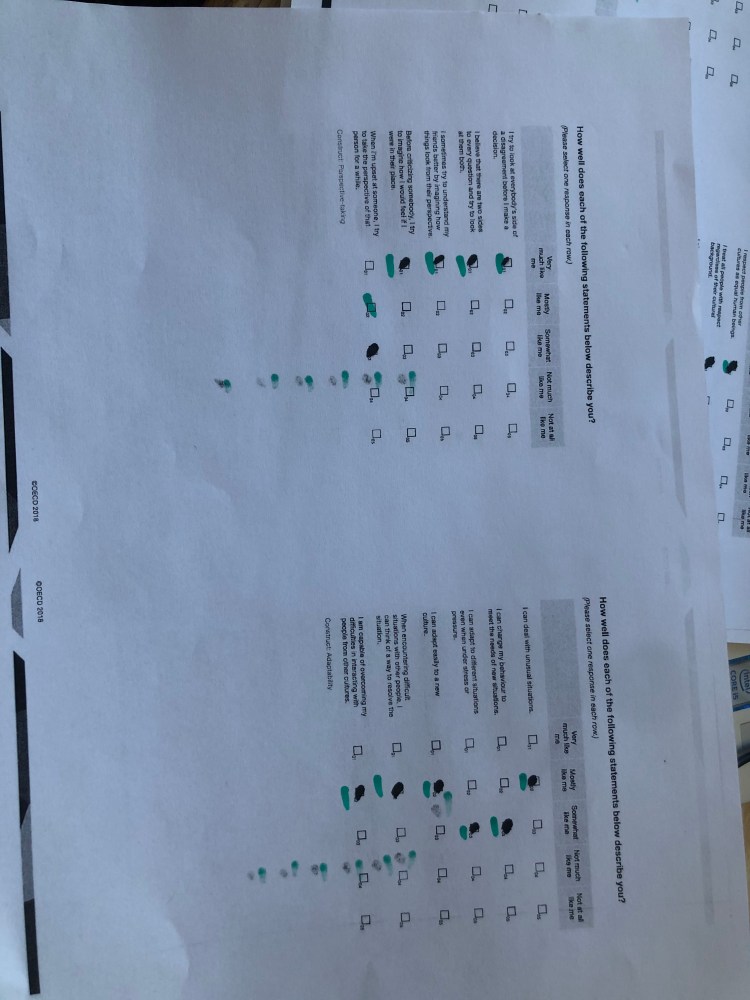
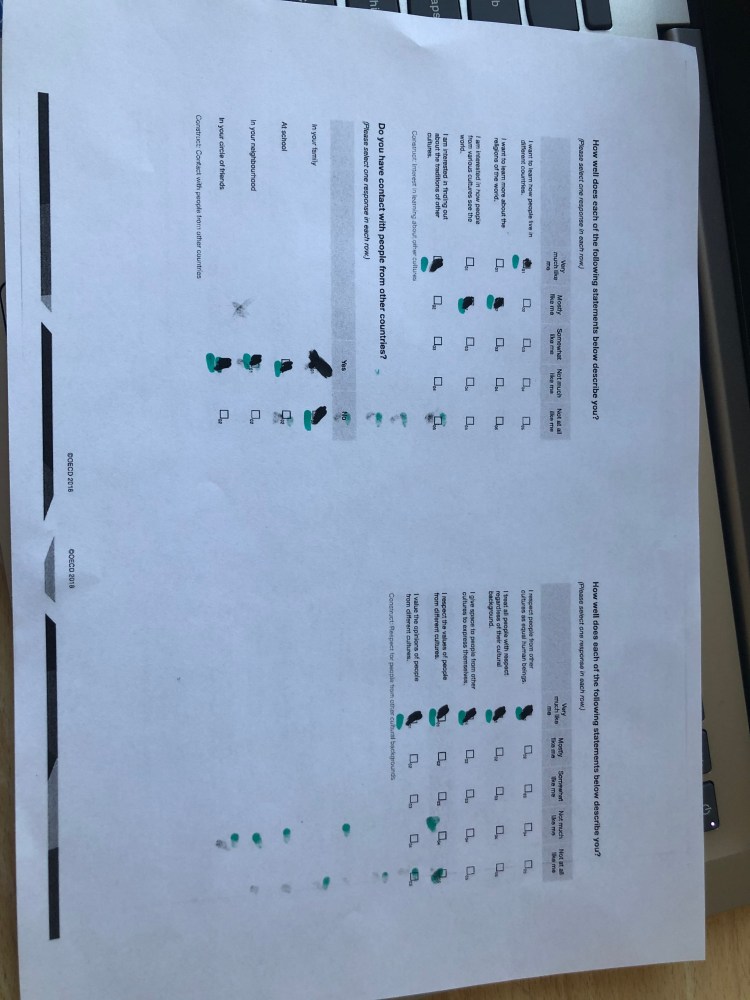
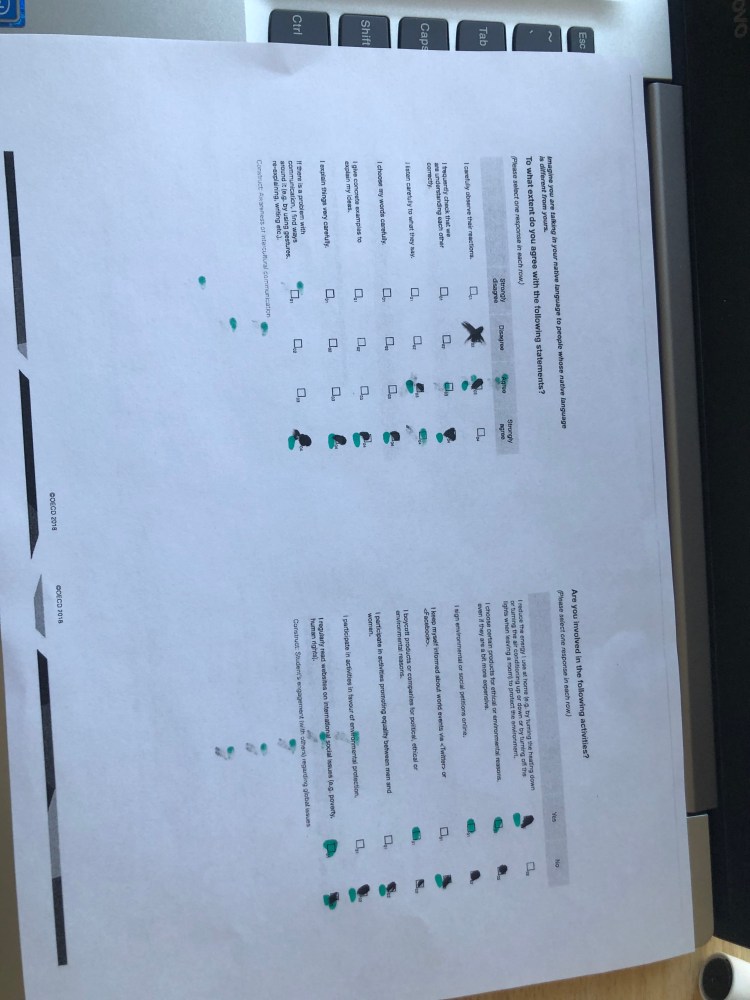
There are not necessarily huge differences between the first and second Pisa outcomes. The intercultural part has stayed the same because I was already pretty aware regarding that subject. However, I have become more aware that I can do something too in order for the world to become a better place. I did not think so during the first Pisa but during the minor I have been exposed to people who started off so small yet now they make a significant difference. Furthermore, Looking after the environment has become more important to me. This becomes evident in de section: “Are you involved in the following activities?” Most of my answers were no, but I took them really into consideration. I sign petitions more often and I don’t buy products which affect the sea or the animals.
 Imren Goes Beyond Borders